

Every communicator loves a clever message. But three very different campaigns, AIDS prevention in Africa, Italy’s COVID-19 social media response and World Thrombosis Day, show that a message only works when it fits the people receiving it. PR professionals call the opposite approach “parachuting”: dropping into a community with answers before asking a single question.
The better path starts with listening.
Culture Is the Channel
Fearn-Banks (2007) explains why parachuting fails: outsiders try to change a way of life they do not understand. Botswana learned this the hard way. Billboards urged citizens to abstain, be faithful and use condoms, but audiences could not tell who the slogan targeted, so behavior barely moved. Zambia fared better by pairing local radio, drama and peer educators with the rural audiences who actually used them. South Africa’s LoveLife campaign borrowed the look of a rap album because researched showed youth were drawn to American pop culture (Fearn-Banks,2007).
Italy’s ministries faced a different version of the problem. Lovari et al. (2024) found that most institutions treated social media as a one-way megaphone, and only FAQ pages hinted at real dialogue. Whether the setting is a village or a Facebook feed, broadcasting is not the same as connecting.
Research Turns Reach Into Results
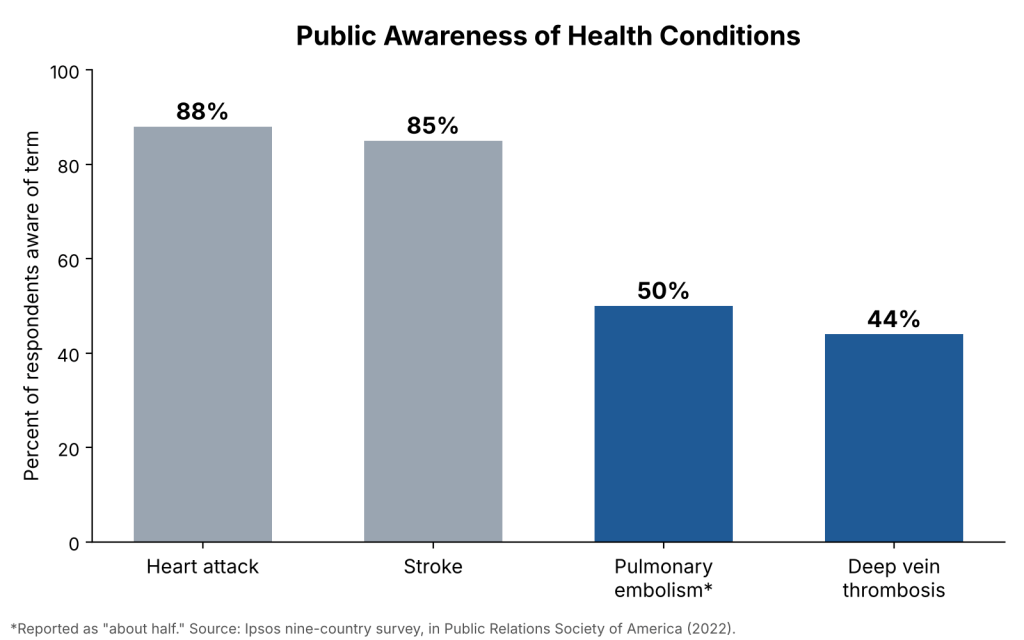
World Thrombosis Day shows what listening looks like in practice. An early Ipsos survey revealed that only 44 percent of people knew the term “deep vein thrombosis,” compared with 88 percent for heart attack. The team used that gap, plus regional partner agencies, to pitch tailored stories to local journalists. Notably, it had previously relied on paid released, then shifted to personalized outreach after studying which tactics worked. The result was more than 900 placements and over five billion impressions, most of them earned (PRSA,2022).
Trust Is the Real Outcome
Trust explains why this matters. Pew Research Center (2022) found Americans split almost evenly on whether health officials communicated well during COVID-19. Harvard’s Chan School (2023) summarized research showing that trust in state and local agencies grew from perceived compassion and effort, while distrust came from inconsistent guidance. In other words, a message is only as credible as the messenger delivering it. Local, consistent, human messengers earn belief. Distant ones do not.
The Takeaway
Before launching the campaign, ask three questions:
- Who exactly am I trying to reach?
- How do they already get information?
- Whom do they trust to deliver it?
Culture, research and trust are not extras added after the plan is written. They are the plan.
References
Fearn-Banks, K. (2007). Crisis communications: A casebook approach (3rd ed.). Lawrence Erlbaum Associates.
Harvard T.H. Chan School of Public Health. (2023). Lessons learned: The reasons for trust. https://hsph.harvard.edu/?p=46627
Lovari, A., Comunello, F., Massa, A., Ieracitano, F., & Marinelli, A. (2024). Managing digital strategic communication during the COVID-19 pandemic: Insights from Italian ministries and governmental institutions. In [book title and editors from your copy] (pp. 183–195). Routledge. https://doi.org/10.4324/9781003327189-16
Pew Research Center. (2022, October 5). Lack of preparedness among top reactions Americans have to public health officials’ COVID-19 response. https://www.pewresearch.org/science/2022/10/05/lack-of-preparedness-among-top-reactions-americans-have-to-public-health-officials-covid-19-response/
Public Relations Society of America. (2022). World Thrombosis Day helps the world learn “how to save a life” [Silver Anvil Award entry].


Leave a Reply